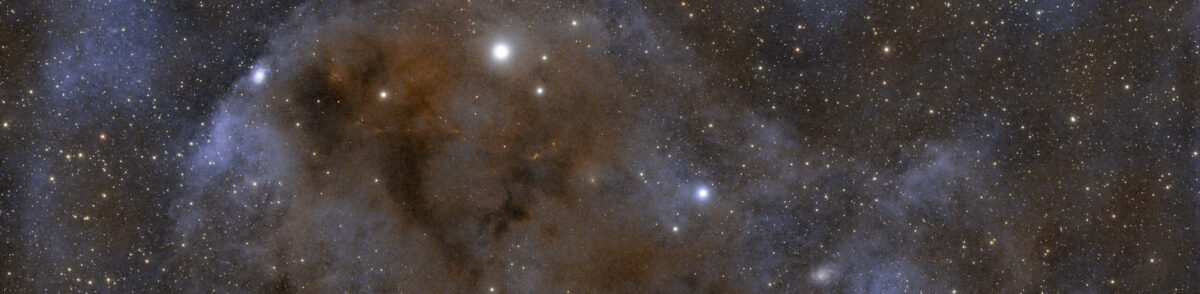

NGC 2355, also known as NGC 2356, is an old open star cluster in the constellation Gemini. It is approximately a billion years old. The cluster is located about 5,400 light-years from the Solar System. It is 1,100 light-years above the Milky Way galaxy’s plane.
NGC 2355 is useful for studying the chemical and dynamical evolution of the Galactic disk. Recent studies using Gaia DR3 data have identified over 400 member stars within the cluster. They have also discovered dozens of variable stars. These include eclipsing binaries and pulsating stars.
NGC 2355 is located in the outer disk and elevated above the plane. This position makes it an important probe for understanding the evolution and structure of the Milky Way’s galactic disk. It is particularly valuable for studying star formation and dynamical processes in less dense regions.
NGC 2355 lies near the celestial equator. It is observable from both the Northern and Southern Hemispheres. It favors northern latitudes where Gemini rises higher in the sky. In the Northern Hemisphere, it is best viewed during winter months from December to March. During this time, the constellation is prominent in the evening sky. From mid-northern latitudes such as 40°N, the cluster culminates at an altitude of approximately 63° above the horizon. This provides favorable viewing conditions away from atmospheric distortion.
I photographed this cluster from my driveway in the foothills of the Blue Ridge Mountains. I use APT for session management, image acquisition, and automation. 71 60sec subframes for just a touch over an hour of integration. Calibrated, aligned, integrated, and processed manually using PixInsight.