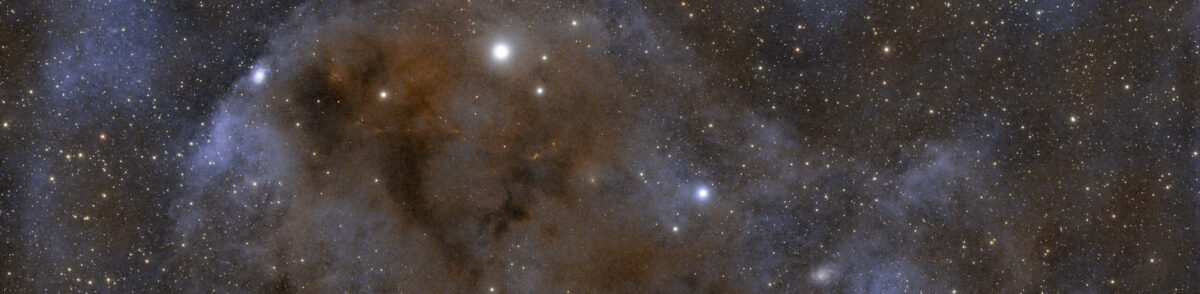

Messier 16 is also known as the Eagle Nebula or the Star Queen Nebula. It is considered an emission nebula in the constellation Serpens. It contains the Pillars of Creation. It’s located in the Milky Way’s Sagittarius Arm, about 7,000 light-years away from Earth. Parts of the Eagle Nebula are emission nebulas. The clouds of gas and dust are so hot they produce their own light. Other parts are dark nebulas. They are made of cold gas. These parts are only visible because of the silhouettes they create against the nebula’s glowing backdrop.
The Pillars of Creation are wispy columns of gas and dust in the nebula’s southern region that hide newborn stars. The Hubble Space Telescope’s 1995 image of the Pillars of Creation made them famous. The nebula’s dark silhouette near its center, which includes the Pillars of Creation, inspired the names “Eagle” and “Star Queen”.
The Eagle Nebula also contains the young star cluster NGC 6611. The nebula has several active star-forming regions. One of these is the Pillars of Creation. Here, gravity pulls gas clumps together to form stars. The wavy lines at the edges of some pillars are ejections from forming stars that collide with clouds of material. These collisions can also create bow shocks, which can form wavy patterns. The crimson glow comes from energetic hydrogen molecules that result from these jets and shocks.
This image was created from 117 240″ exposures captured using APT and calibrated/integrated using PixInsight. APT coordinates all of the technology used in imaging. This includes the cooled astro camera (ASI2600MC). It also includes the Telescope and its focusing (SW Esprit 120ED). Additionally, it includes the Eq6r Pro Mount that tracks with the stars.