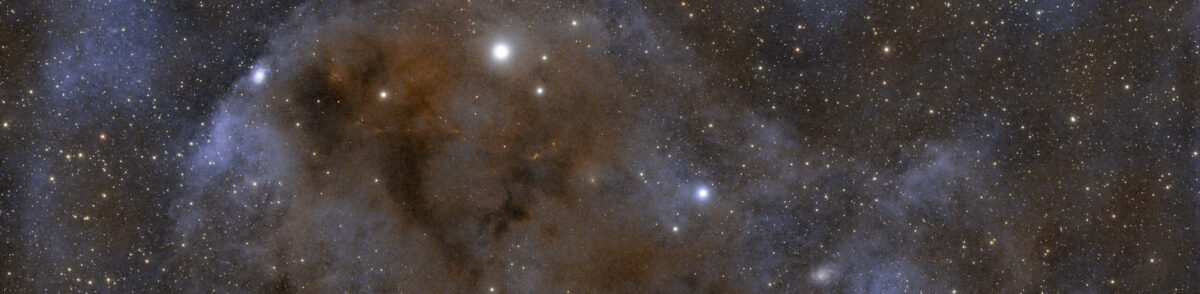

Messier 100 (also known as NGC 4321 or the Blow Dryer Galaxy) is a grand design intermediate spiral galaxy. It is located in the southern part of the mildly northern Coma Berenices. It is one of the brightest galaxies in the Virgo Cluster. It is also one of the largest. The galaxy is approximately 55 million light-years from our galaxy.
It was one of the first spiral galaxies to be discovered. Lord William Parsons of Rosse listed it as one of fourteen spiral nebulae in 1850. NGC 4323 and NGC 4328 are satellite galaxies of M100. NGC 4323 is connected to M100 by a bridge of luminous matter.
Messier 100 is considered a starburst galaxy. The strongest star formation activity is concentrated in its center. This occurs within a ring, which is actually two tightly wound spiral arms. These are attached to a small nuclear bar with a radius of one thousand parsecs. Star formation has been taking place here for at least 500 million years in separate bursts.
As usual on spiral galaxies of the Virgo Cluster, the rest of the disk shows truncated star formation. It also contains neutral hydrogen. M100 is deficient in these elements compared to isolated spiral galaxies of similar Hubble type. This truncation is caused by interactions with the intracluster medium of Virgo.
This image was captured from my driveway in the hills of North Carolina in Bortle 4ish skies. It consists of 192 240″ exposures through an RC8 scope paired with an ASI071MC camera atop an Eq6r Pro mount. Image session management with APT 4.60 and processed manually in PixInsight.